Photograph: Onyango George / EA Hospitality Pulse
India got a daily flight to Tanzania this morning. The guest on it is worth $276 a night less.
IndiGo's first daily Mumbai to Dar es Salaam service was scheduled to land at 06:05 today, and India entered Tanzania's mainland top fifteen source markets for the first time last year. But package visitors spent $479 a night on the mainland in 2025 and non-package visitors spent $203. A seat bought on an airline website arrives without a package, and the constraint East Africa keeps calling connectivity is really conversion.
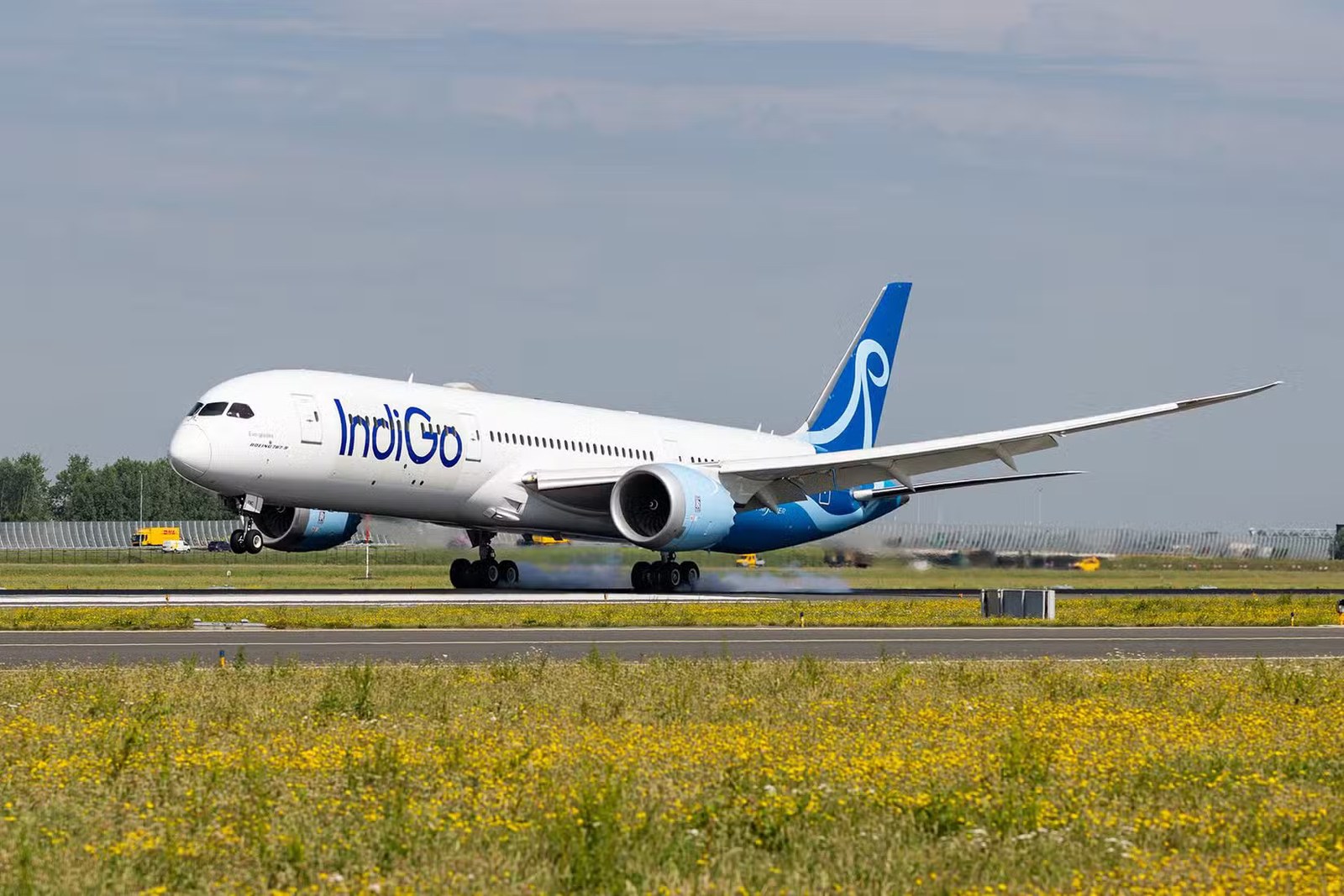
The aircraft was scheduled to push back from Mumbai at 02:20 and to be on the ground in Dar es Salaam at 06:05, local time, with an hour to turn before it went back the other way at 07:05. That is the whole shape of IndiGo 6E 1851 and 6E 1852, daily from today, and it is the first time an Indian carrier has put its own aircraft on the route. It is also the second East African city on a network that already reaches Nairobi, alongside Mauritius and the Seychelles. When IndiGo published the schedule on 10 September it added the line that airlines always add, that the timings remain subject to regulatory approvals.
East African hospitality has spent three years arguing that the binding constraint on its business is the seat. Here is a seat. It is daily, it is in the hands of the largest low-cost carrier in one of the fastest-growing outbound markets on earth, and it connects a country that last year earned $4.41bn from tourism to a city of twenty million people. The temptation is to file it under good news and move on. The more useful exercise is to ask what kind of guest a seat like this delivers, because Tanzania's own numbers answer that question with unusual precision, and the answer should change what lodges and hotels do between now and April.
Start with what the airline says the route is for. "Tanzania is an important economic partner for India and a gateway to East Africa," Aloke Singh, IndiGo's chief strategy officer, said when the route was announced, "with growing demand for travel driven by trade, investment, tourism and cultural ties." Note the order of that list. Trade first, investment second, tourism third. The products the release names are UpFront and Flexi, which are a seat assignment and a change fee waiver. They are not a holiday. Nothing about this launch was built to move a safari package, and nobody at the airline pretended otherwise.
That matters because of what the Bank of Tanzania's 2025 International Visitors' Exit Survey found about how money actually reaches Tanzanian hospitality. The headline numbers were good. Arrivals reached 2,294,495, up about 7 per cent on 2,141,895 the year before. Earnings rose 13 per cent to $4,410.6m. Average expenditure on the mainland climbed 19 per cent to $289 per person per night, with the average visitor staying nine nights. Zanzibar's figure was $274 a night over six nights. India, for the first time, entered the mainland's top fifteen source markets, arriving alongside the Netherlands and displacing Australia and Burundi.
Underneath those averages sits the number that should be pinned above every reservations desk in Arusha. Package visitors were 58.8 per cent of mainland arrivals in 2025 and produced 75.2 per cent of the earnings. They spent $479 per person per night. Non-package visitors, the ones who assemble their own trip, spent $203. The gap is $276 a night, and it widened over the year. On Zanzibar the split is starker in volume terms, with packages at 67.2 per cent of visitors, and the spend gap is $379 against $211.
A 02:20 departure sold on goindigo.in is, by construction, a non-package seat. It is bought by a person with a credit card and a calendar, not by a tour operator buying allocation twelve months out. The traveller who books it has already made the decision that costs East African hospitality the most money: they have chosen to be their own tour operator. Every subsequent decision, where to sleep, whether to go north at all, whether Zanzibar is worth a separate ticket, is now a series of small purchases made against a budget that has already absorbed an airfare. In the 2025 survey, that traveller was worth $203 a night. The one who arrived on a package was worth $479.
It would be easy and wrong to read that as a verdict on Indian travellers. The Indian trade is not cheap, and the evidence is in its own price lists. TripCabinet, a Bangalore seller, prices a mid-range Tanzanian lodge safari at $400 to $800 a day excluding international flights, and a luxury fly-in at $1,000 to $2,500 and up. Safari Sutra advertises a ten-night safari and Zanzibar combination at 350,000 rupees per person including flights from Delhi or Mumbai, with three Serengeti nights, two at Ngorongoro and three on the island. Those are not budget numbers. The mid-range figure sits squarely on top of Tanzania's own package average of $479 a night. When the Indian market buys the packaged product, it pays the packaged price.
The question, then, is not whether the demand can pay. It is whether anyone will sell it a package. "This timing presents a prime opportunity for local tour operators to appeal to the Indian market," Vinay Sapra, a board member of the Tanzania Association of Tour Operators, told an industry gathering in Arusha in August 2024, adding that Indian travellers "though price-sensitive, they value quality tourism products and services," and that they "seek familiar affiliations, such as food." Sapra also made an observation that has aged into something close to a commercial instruction: Indian holidaymakers travel heavily in April and May and again in November, which is precisely when Tanzanian occupancy sags. A market that wants to come in the long rains is worth more than its average daily rate suggests, because it buys nights nobody else is buying.
Two years on from that gathering, the seat has arrived and the product has not visibly followed. Devotha Mdachi, now head of communications and marketing at the National College of Tourism and previously managing director of the Tanzania Tourist Board, said at the same event that Tanzania had "the opportunity to capture a significant portion" of Indian outbound spending, and described a four-part plan with TATO covering asset assessment, development, training and marketing. No public account of that programme's output has appeared since. The route did not wait for it.
Geography compounds the problem. IndiGo lands in Dar es Salaam, which is where Tanzania's business is, not where its tourism product is. A 06:05 arrival into Julius Nyerere with an aircraft leaving again at 07:05 means there is no through connection on the same ticket, no bag checked to Zanzibar or Kilimanjaro, and no carrier taking responsibility if the domestic leg goes wrong. The traveller who wants the Serengeti must buy a second ticket, from a second airline, on a second booking, and absorb the risk themselves. That is an administrative friction on a trip, and it is also a conversion funnel: every additional booking step is a chance for the trip to shrink into two nights in Dar es Salaam and a flight home.
Compare the other seat Tanzania won this cycle. British Airways intends to fly London Gatwick to Kilimanjaro and Zanzibar three times a week from 29 May 2027. "We're excited to be launching flights to two exceptional new destinations that showcase the very best of Tanzania," Neil Chernoff, the airline's chief planning and strategy officer, said of that plan. Whatever one makes of the marketing, the route design tells you who the passenger is. BA is putting its aircraft down at the gateway to the northern circuit and on the beach. IndiGo is putting its aircraft down at the commercial capital. One is a holiday route. The other is a trade route that tourism may ride on if someone bothers to build the ride.
There is a further wrinkle on the supply side. Air Tanzania has flown Dar es Salaam to Mumbai for some time and moved the service to daily in June 2026, a change its director of marketing and commercial services, Dominic Louis, attributed to growth in business, medical, education and tourism traffic. From today the city pair carries two daily frequencies where it recently carried four flights a week. That is ordinarily an excellent thing for a destination, and it is also the setup for a fare contest. East Africa has seen this film. Zanzibar took an 11 per cent rise in airline capacity last year and watched weighted average online room rates fall by roughly 18 per cent across every category. Cheaper seats do not automatically become dearer rooms. They become cheaper seats, and the margin moves to whoever controls the package.
Which is the part of this that is genuinely structural rather than merely topical. As of this week, every one of the 34 airlines certified under Tanzania's safety oversight remains barred from operating to, from or over the European Union, a restriction the European Commission's renewed air safety list left in place. Tanzania's largest mainland source markets in 2025 were the United States at 12.4 per cent of visitors, Italy at 11.8 per cent and France at 7.0 per cent. Those are the package markets, the $479-a-night markets, and no Tanzanian carrier can carry them home. Tanzania therefore has no national instrument for the traffic that pays best, and a growing supply of foreign instruments for traffic that books direct. That asymmetry, not the raw seat count, is the thing worth a board paper.
None of this argues against the Mumbai route. A daily seat into a top-fifteen market is a real asset, and the seasonality alone, April, May and November, makes it more valuable to a Tanzanian lodge than a July seat from Europe. But the asset has to be converted, and conversion is a product problem, not an airport problem. It means a packaged itinerary priced in rupees and sold through Indian agents, with the domestic leg inside the price rather than bolted on afterwards. It means a dawn arrival handled properly, with a room available at 07:00 rather than at 14:00. It means kitchens that can produce vegetarian and Jain food as a standard rather than as a favour arranged at booking. And it means quoting the November dates first, because that is when the market wants to travel and when the beds are empty.
The seat was never the constraint. Tanzania's own survey priced the constraint at $276 a night, and it has been sitting in the exit data all along. An aircraft landed in Dar es Salaam at six o'clock this morning carrying people who have already decided to arrange their own holiday. Whether they are worth $203 a night or $479 is now a commercial decision, and it belongs to the operators, not to the airline.
📣 Telegram 💬 WhatsApp 💼 LinkedIn 📚 All guides